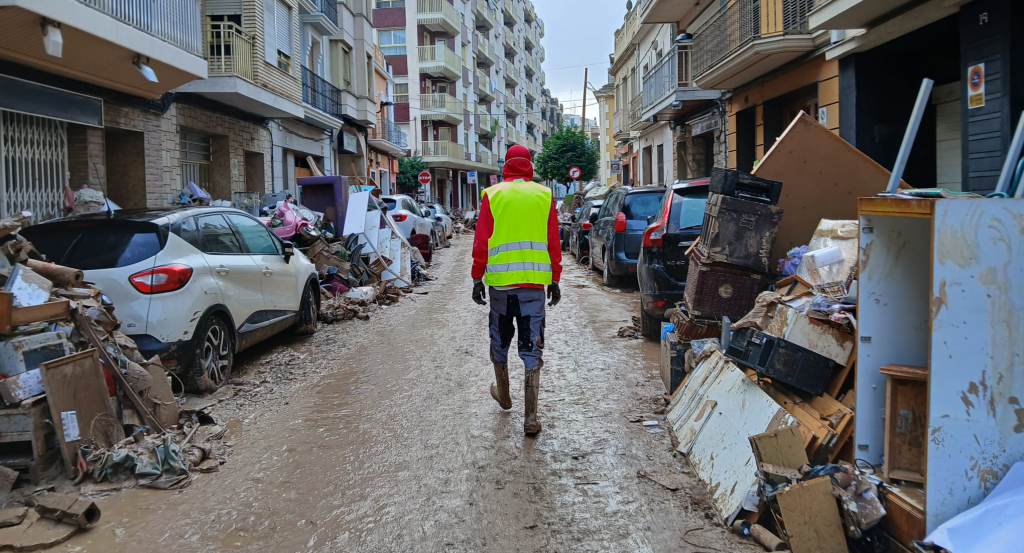
The Consorci de la Ribera, formed by the associations of municipalities of Ribera Alta and Ribera Baixa, is launching the European EMMA project this October. Funded by the European Union through the ERASMUS+ programme, the initiative aims to address a series of challenges in terms of the effective management and coordination of volunteering during climate emergencies in small and medium-sized municipalities.
In this European project, the Consorci de la Ribera acts as coordinator and has as partners the Ajuntament de Cullera and four international institutions. These are the Consorzio Scuola Cominità Impresa in Italy, Telewandre ApS in Denmark, the Universitatea Lucian Blaga Din Sibu in Romania and the municipality of Lake Plastira in Greece.
The project focuses specifically on inefficiencies and coordination difficulties in the face of disasters. Therefore, EMMA’s goal is to provide a training system for municipal employees in the management of volunteers during relief operations. Specifically, it aims to provide a set of information and training tools to strengthen the skills of staff who are normally engaged in other tasks but also participate in the coordination of citizen volunteering. It should be noted that when the number of employees is small, everyone has to respond in an emergency.
EMMA will implement systems that enable the efficient registration and management of volunteers, resource and needs planning so that municipalities can anticipate disasters, and improved communication with citizens. It will also establish protocols to ensure the physical and psychological safety of volunteers. In addition, it plans to strengthen coordination between municipalities, NGOs and civil protection agencies, provide training and tools for team management, monitor and evaluate the effectiveness of aid to those in need, and promote motivation and participation in volunteering. Technologies such as artificial intelligence and augmented reality will play a key role.
The forecast envisages significant changes in organisational practices, the skills of local council staff and community preparedness. Specifically, it is expected that there will be an improvement in the skills of municipal staff in coordinating volunteers during climate emergencies, the integration of the EMMA training system into the internal training plans of the Consorci de la Ribera and the associations of municipalities, and the dissemination of the EMMA toolkit in the municipalities of the region.
The initiatives will last for 24 months, but all the materials developed during the implementation of EMMA will be made available to municipalities and the public and will be used to train citizens after the project ends.