
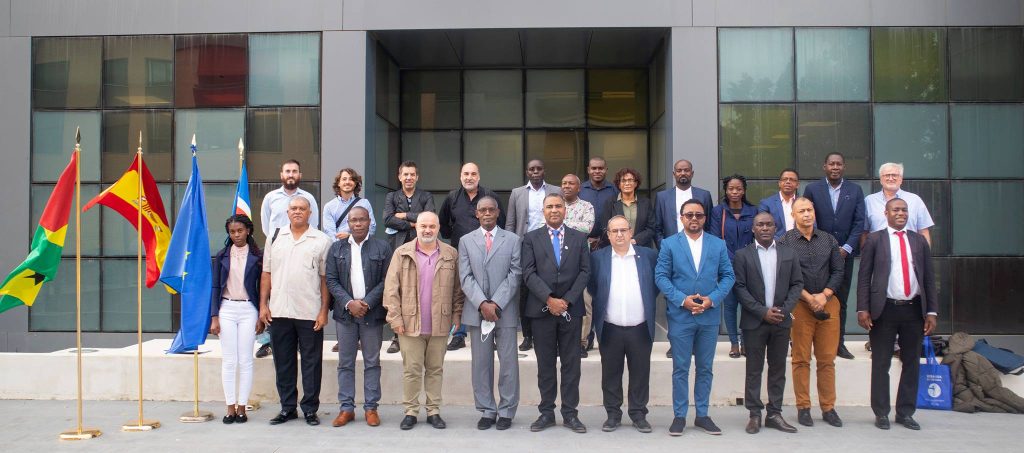
The Consorci de la Ribera is organising training sessions as part of the European REHDES project for 19 technicians and leaders from São Tomé and Príncipe and Cape Verde.
On Monday, the delegation was welcomed by the president of the Consorci de la Ribera, Òscar Navarro, and the president of the Mancomunitat, Txema Pelàez, at the regional authority’s headquarters on Taronger Street in Alzira. In the afternoon, the mayor of Algemesí, Marta Trenzano, welcomed the group to the Museu Valencià de la Festa in Algemesí, together with its director, Julio Blasco, to learn about the museum’s experience in promoting and enhancing cultural heritage.
During the week of 4 to 8 October, the African delegation will learn about different good practices in public policy and waste management. In addition to Alzira, they will visit the municipalities of l’Alcúdia, Algemesí, Guadassuar, Tous and Sumacàrcer, with several field visits.
The REHDES project is funded by the European Union with a total budget of €2 million and a duration of 30 months. The Consorci de la Ribera is the coordinating entity, and its objective is to increase the capacities of local leaders in São Tomé and improve public services such as selective waste collection.
The REHDES (Holistic Reinforcement for Sustainable Development) international cooperation project has one of its most important phases in La Ribera, with the training of a delegation of 19 people from the countries of São Tomé and Príncipe and Cape Verde, both archipelagos on the African continent. The District Council of Agua Grande, capital of São Tomé, and the Municipal Council of Mosteiros, located on the island of Fogo, are participating in the project. The delegation is made up of leaders and technicians from both countries. Among them are the presidents of the two Chambers, the rector of the University of São Tomé, the Secretary of State for Infrastructure, elected representatives of the local authority and technicians responsible for environmental and waste management.
The training topics included environmental and waste management and the circular economy, citizen participation and co-governance. The experience in the Ribera region in different areas such as door-to-door selective waste collection, training local leaders and promoting participatory processes are some of the experiences that will be shared with African partners. This will contribute to improving the living conditions of their inhabitants.


